The Capybara Didn't Sign Up for This: Inside Japan's Animal Game Show Machine (And Why America Can't Look Away)
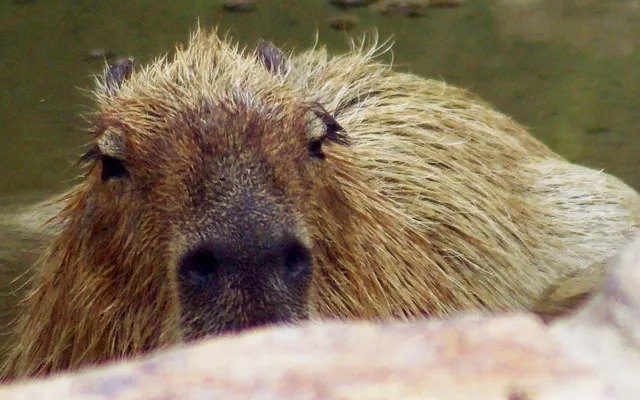
Photo: Original uploader was VigilancePrime at en.wikipedia, CC BY 3.0, via Wikimedia Commons
There's a moment in every Japanese animal competition clip that American pet content simply does not have. The dog, mid-leap, is flying toward the pool. The camera cuts to a panel of judges in matching blazers. One of them nods, gravely, as if evaluating a figure skating routine. The scoreboard updates. The crowd — an actual crowd — gasps.
Nobody in the clip is winking at the camera. Nobody is acknowledging the absurdity. That's the whole trick, and it's why these clips are currently eating your algorithm alive.
The Genre That Refuses to Break Character
Western pet content is built on a simple transaction: the animal does something cute, and a human tells you it's cute. "Who's a good boy?" is practically the genre's thesis statement.
Japanese animal competition programming operates on entirely different logic. The animal is not your pet. The animal is an athlete. The show treats a corgi paddling across a pool with the production values, commentary discipline, and competitive stakes of an Olympic final. There are heats. There are rankings. There are slow-motion replays with analytical voiceover.
The result is a kind of deadpan maximalism — enormous effort spent on something gloriously low-stakes — that American audiences have been primed to love by years of Japanese game show clips, but with one crucial upgrade: there's a fluffy contestant in every frame.
Capybaras, Hot Springs, and the Art of the Fake Race
The crown jewel of the genre might be the capybara race format, in which the world's chillest rodents are gently encouraged to move through a bath or hot spring toward a goal. The word "race" is doing heroic work here. Some capybaras finish. Some capybaras stop halfway to sit down. One, in a clip that has racked up millions of views on American timelines, appears to fall asleep mid-competition.
The comedy is structural, not performed. The show never admits the joke. The commentators track the "race" with genuine urgency. A graphic shows each capybara's split time. And the animal — serene, unbothered, radiating the emotional regulation most of us can't manage before our second coffee — simply exists at its own pace.
For an American audience raised on hustle culture and content-creator urgency, it lands somewhere between comedy and therapy.
Dogs Who Are Better Athletes Than You
Then there's the diving dog circuit. These segments feature genuine athletic spectacle — dogs launching off platforms into pools with form that would get a nod from a springboard coach — wrapped in full broadcast treatment. Underwater cameras. Splash-zone replays. Judges holding up scores.
What makes it binge-able rather than just impressive is the variety of contestants. Not every dog is a natural. There's always one contestant who climbs the platform, surveys the water below, and makes a decision that looks suspiciously like refusing. The show loves these dogs. The audience loves these dogs more. The comments sections on American reposts are essentially a support group for people who felt personally represented by a beagle who backed down the ladder.
Cat agility content follows the same formula with a twist: cats, being cats, treat the obstacle course as a suggestion. The production treats every completed run as a triumph and every refusal as a valid competitive strategy. It's the only sport where the athlete's indifference is part of the scoring.
The Production Nobody Skips
Here's what separates a clip you scroll past from a clip you send to your group chat: craft. These shows invest in their nonsense.
The sets are elaborate — themed obstacle courses, custom-built pools, seasonal decorations. The hosts are consummate professionals who deliver absurd lines with weatherman sincerity. The judges, often veterinarians or trainers, offer actual analysis that is somehow both legitimate and hilarious in context. The music swells on cue. The graphics package would embarrass a mid-market American sports broadcast.
This is the same formula that made Japanese variety clips a staple of American meme culture — total commitment to the bit — but the animal element lowers the barrier to entry. You don't need to know the language. You don't need the cultural context. A capybara declining to race needs no translation.
Your Starter Pack: Five Segments to Binge First
If you're new to the genre, here's the recommended onboarding order:
1. The Diving Dog Championships. Start with the gold-standard clips: platform dives, underwater cams, and at least one contestant with visible second thoughts. This is the genre's greatest hits album.
2. The Capybara Hot Spring Race. The anti-competition competition. Watch it once for the laughs, twice because you now need to know how it ends, and a third time because it didn't really have an ending.
3. Cat Agility Tower Runs. Feline parkour with judges' scores. Bonus points for any run where the cat discovers a shortcut the course designers didn't intend.
4. The Small Dog Sprint Heats. Shorter legs, longer drama. The commentary treats every heat like a photo finish at the Kentucky Derby.
5. The Bunny Hop Counting Contest. Yes, this exists. Yes, there are judges counting hops. Yes, one rabbit famously lost its composure and the internet has never recovered.
Why It's the Perfect Guilty Pleasure
Let's be honest about the "guilty" part — because there's nothing actually guilty here. These are animals being cared for, competing in low-stakes events, surrounded by people whose full-time job is making television about dogs jumping into water. It's wholesome at an industrial scale.
The pleasure is in the commitment. In an American media landscape where everything is ironic, everything winks, everything has a creator begging for engagement in the first three seconds, these clips offer something rarer: a show that believes completely in its own ridiculous premise. The dog dives. The judges score. The capybara sits down.
And you, at 1 a.m., watching a rodent's split time with your hand over your heart, believing completely too.
That's not a guilty pleasure. That's just good television.