Quiet Quittin' Energy: How Japanese Office Vlogs Became America's Favorite Anti-Hustle Watch
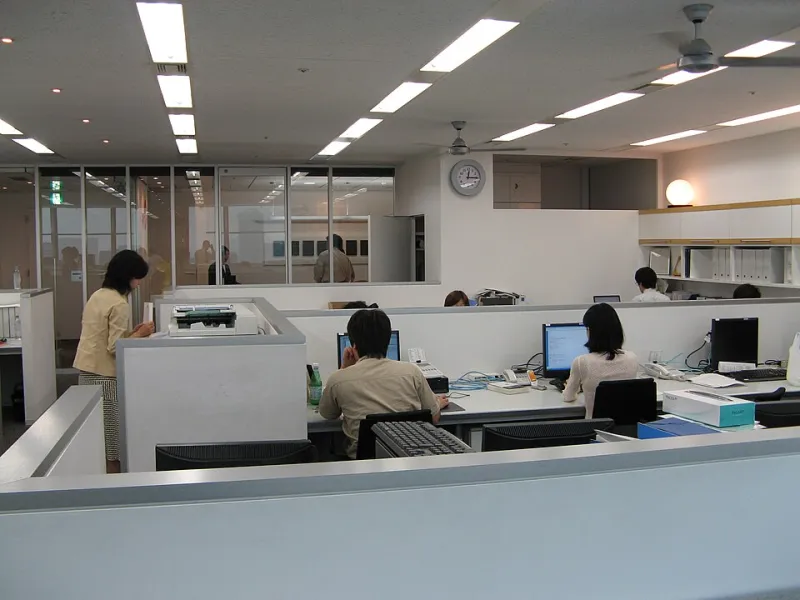
Photo: Tomer Gabel from Israel, CC BY-SA 2.0, via Wikimedia Commons
There's a video genre quietly racking up millions of views on YouTube and TikTok, and almost nothing happens in it.
A woman in a beige cardigan wipes down a lobby desk that is, by every visual indication, already clean. A man in his forties carefully arranges tamagoyaki in a bento box at 5:40 AM. Someone feeds coins into a vending machine. Someone else straightens a stack of papers with a satisfying little tap. That's it. That's the content.
And American viewers cannot stop watching.
The Genre That Refuses to Hustle
If you've spent any time in the algorithm's back alleys, you've seen them: Japanese "day in the life" vlogs, often tagged with hashtags like #officevlog or #workroutine. They follow receptionists, administrative staff, and junior salarymen through routines that would make a US productivity influencer weep into their Notion dashboard. There's no 5 AM cold plunge. no "crushing it," no side hustle reveal at the end. There's a train ride. There's lunch. There's the small ritual of returning to your desk with a canned coffee.
The production values are often shockingly high — soft natural lighting, ambient ASMR-grade audio, shots composed like Ozu films — but the content itself is aggressively mundane. And that's precisely the magic trick.
For US viewers deep-fried in hustle culture, these videos read less like content and more like a fantasy of employment. A job where you do your tasks, do them neatly, and then go home? Where the peak of workplace drama is choosing between two vending machine teas? For a country where "quiet quitting" became a national debate, this isn't boring. It's aspirational.
Why Burnt-Out Americans Are Hooked
The comments sections tell the whole story. Under a video of an office worker methodically cleaning her keyboard, American users write things like "this is the most peaceful workplace I've ever witnessed" and "I would give anything for a job where this is the vibe."
Part of it is the ASMR effect — the gentle clinks, the rustle of papers, the rhythmic sweeping. Part of it is the same appeal that made "slow living" and cottagecore blow up stateside: a fantasy of order in a chaotic time. But there's a third element specific to the workplace genre. These videos present work as something neutral. Neither a calling nor a cage. Just a thing you do, competently, before your evening begins.
For American workers who've spent a decade being told their job should be their passion — and who've watched passion get monetized into burnout — that neutrality feels almost radical. The office lady vacuuming a pristine lobby isn't building a personal brand. She's just at work. Then she isn't.
The Copycats Are Already Here
The format has started migrating. A wave of US-based creators — nurses, library assistants, municipal workers — have begun filming their own "quiet workday" vlogs, borrowing the Japanese template wholesale: no talking, no music or minimal ambient sound, long static shots of ordinary tasks.
A hospital phlebotomist in Ohio who posts under a Japanese-style routine format told us she started after her restock-the-supply-cart video outperformed everything else on her channel by a factor of ten. "People kept saying it felt like a Japanese office vlog," she said. "I hadn't even seen one yet. Now I get it. Nobody wants a mentor. They want a nap."
A library page in Portland films herself shelving books in near silence. A DMV clerk has built a modest following straightening forms. None of them are getting rich. All of them are getting something arguably rarer: comments saying "this healed something in me."
The Binge Factor
Here at Douga Mania, we've noticed something about how people actually consume these clips: they don't watch one. They watch eleven. The genre is basically serialized comfort food — low stakes, familiar rhythms, an implicit promise that the next video will be exactly like the last one. It's the video equivalent of putting on "The Office" for the ninth time, except nobody's miserable and nothing blows up.
There's also a treasure-hunt element. Many of the best channels have zero English subtitles and zero explanation. You don't need them. The bento gets packed. The desk gets wiped. The 6:15 train arrives. The plot is the routine, and the routine never betrays you.
So Is This a Fantasy or a Red Flag?
The cynical read: Americans are so exhausted that watching someone else perform ordinary labor has become leisure. The generous read: these vlogs offer a healthier template for thinking about work than anything Silicon Valley has produced this decade.
Honestly? Both can be true. The genre took off here precisely because the gap between the Japanese office vlog and the average American workday is enormous — the calm, the boundaries, the absence of a Slack notification at 9 PM. Watching it is part vacation, part protest.
Either way, the recommendation is simple: queue up a playlist tonight, start with a bento-packing video, and let the algorithm carry you gently into the lobby-wiping deep cuts. Your burnout won't be cured. But for fifteen quiet minutes, somebody somewhere is just doing their job — and going home.
That's the fantasy. And honestly, it's a good one.