From Tokyo Airwaves to Your Group Chat: 7 Japanese TV Segments That Became Full-Blown American Memes
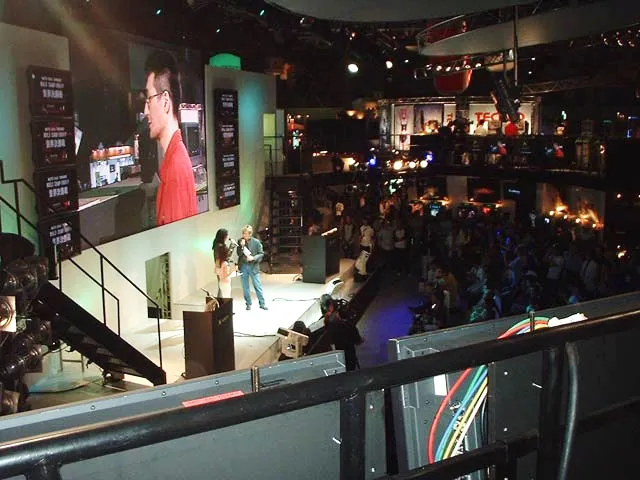
Photo: Darren Forman, CC BY-SA 3.0, via Wikimedia Commons
Every meme has a genealogy, and a shocking number of them lead back to a Japanese variety show filmed on a brightly lit soundstage somewhere in Tokyo, usually in the early 2000s, usually involving a celebrity being gently tortured for our entertainment.
American internet culture didn't just borrow these segments — it metabolized them. Below, seven segments that made the leap from Japanese TV to your group chat, ranked by how absurd the original premise is when you explain it out loud.
1. The Silent Library
The original: A segment from Downtown no Gaki no Tsukai ya Arahende!! where cast members sat in a library wearing absurd headgear and took turns inflicting pain on each other. The rule: make zero noise, or face further punishment. Grown men biting into wasabi-filled pastries while trying not to scream remains one of the great pieces of physical comedy ever filmed.
The meme afterlife: The format became a global party game and an entire YouTube genre. American YouTubers ran their own versions for years, and "Silent Library" was even adapted as an MTV game show in 2009 — proof that the concept was strong enough to survive a transatlantic remix.
Where to binge: The full library segments are on YouTube under the show's Japanese title; the compilation cuts are the best entry point.
2. The Human Claw Machine
The original: A game show segment where a contestant was strapped into a harness and lowered into a pit of prizes — or in crueler versions, into a pit of their own fears — while their teammates controlled the crane from a booth.
The meme afterlife: The clip became a go-to reaction for "me at every point in my life" humor. The visual of a person dangling helplessly while friends make decisions is, frankly, the human condition in GIF form.
3. Chair-Flying (The Slippery Chair Contest)
The original: Contestants raced across a studio on wheeled office chairs, pushing themselves with their feet, wiping out spectacularly. Simple premise, endless carnage.
The meme afterlife: Every office chair fail on TikTok is a descendant of this segment. The slo-mo wipeout cut is a reaction staple for anything involving overconfidence meeting consequences.
4. The Wall Slam (Sliding Wall Game)
The original: A giant foam wall slid across a stage, and contestants had to answer trivia or fit through cutout shapes to avoid being gently but firmly bulldozed into a pool.
The meme afterlife: "The wall is coming" became shorthand for any unavoidable deadline — finals week, taxes, Monday. The clip of a man in a bunny suit getting swept off his feet has outlived several governments.
5. The Marshmallow Bite Game
The original: Couples or rivals had to snatch a marshmallow dangling on a string using only their lips, while their hands were tied behind their backs. Tension, chemistry, and public humiliation in one tidy package.
The meme afterlife: This one fueled an entire genre of awkward-tension reaction content. Every "the tension was TENSE" TikTok with two people refusing to make eye contact owes it royalties.
6. The Human Tetris / Hole in the Wall
The original: Contestants wore foam suits and contorted their bodies to fit through shapes cut into a moving wall. Fail, and the wall pushes you into water.
The meme afterlife: Adapted as Hole in the Wall in the US and UK, but the meme version — a person confidently walking into a situation shaped nothing like them — is the one that stuck around.
7. The Absolute Punishment Game (Batsu Game)
The original: The granddaddy of them all. Comedians who lost a bet endured escalating punishments — often a full 24 hours of increasingly unhinged pranks — broadcast as an annual New Year's special.
The meme afterlife: Every "he did NOT just do that" compilation, every prank-war escalation video, every group chat bet with consequences — this is the source code.
Why These Formats Translated So Well
Physical comedy needs no subtitles. That's the whole trick. A man flying off a wheeled chair reads the same in Osaka as in Ohio, which made these clips perfectly portable in the pre-subtitle era of the early internet.
The deeper reason, though, is that Japanese variety shows committed to the bit in a way Western TV rarely did. Full sets, custom costumes, celebrity participants, genuine stakes. That production value is why the clips still hold up decades later — and why they'll probably keep spawning memes long after we've all been slammed into a pool by a foam wall ourselves.