Sir, May I Ask Why You're Carrying a Plastic Squid? Japan's Street Interview Clips After Midnight
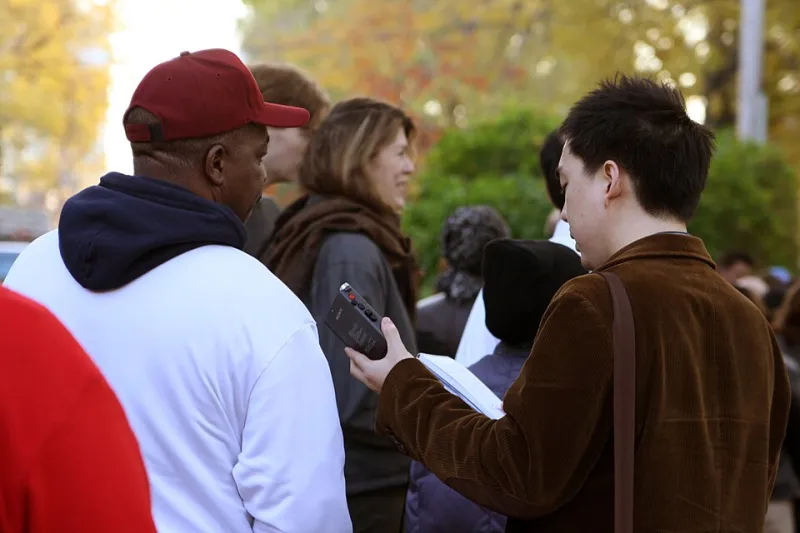
Photo: Quinn Dombrowski from Berkeley, USA, CC BY-SA 2.0, via Wikimedia Commons
It is 1:07 a.m., and a Japanese interviewer is standing outside a train station with a microphone and the expression of a man who has accepted his fate. He approaches a stranger and asks, very politely, whether the stranger would mind explaining the purpose of a plastic squid. The stranger looks at the squid. The stranger looks at the camera. The stranger begins to answer seriously. Nobody laughs. The awkwardness expands to fill the available space.
This is the strange comfort of Japan's street interview shows, a format that has been circulating on Japanese TV for decades and has now become a late-night habit for American viewers scrolling through clips. On Douga Mania, we have watched these videos migrate from variety-show archives to group chats, and the pattern is always the same: you click one, you watch a stranger answer a ridiculous question with complete sincerity, and suddenly it is 2 a.m.
The Format: Microphone, Crosswalk, Infinite Patience
The setup is simple. A television crew stands in a busy area — Shibuya, Shinjuku, a festival, a shopping street — and stops passersby for short interviews. The questions range from the mundane to the bizarre. Sometimes they ask about love, money, or hometown pride. Sometimes they ask a person to explain a random object, rate a stranger's outfit, or demonstrate a talent they did not know they had.
The magic is in the edit. Japanese street interviews often let the silence sit. The interviewer does not rush to fill the gap. The person being interviewed gets time to think, to laugh, to reconsider their life choices. American late-night shows often cut to a reaction or a punchline. These clips cut to the person's face, and the face is doing more work than any joke writer could.
The Most Meme-Ready Moments Are the Quiet Ones
The viral moments are not always the loudest. They are the ones where a stranger answers a ridiculous question with total earnestness. A man explains why he is carrying a plastic squid. A woman gives a detailed review of a convenience-store dessert. A teenager offers a philosophical take on whether it is okay to eat the last piece of fried chicken. The interviewer nods. The camera holds. The internet does the rest.
That is why these clips travel so well. They do not require context. They require a face, a question, and a pause. The humor comes from the collision between the absurd prompt and the polite response. It is not a prank. It is not an ambush. It is a conversation with a camera nearby, and the camera is the only one who knows how weird the question is.
Why It Works at 1 A.M.
Late-night viewing has always been about lowered defenses. You are not looking for prestige television at 1 a.m. You are looking for something that feels like a friend telling you a story that goes nowhere. Street interview clips fit that mood perfectly. They are short, low-commitment, and oddly soothing. The streets are busy, the people are ordinary, and the questions are just strange enough to keep you awake.
There is also a reassuring rhythm to the format. The interviewer introduces himself. The stranger agrees to talk. The question lands. The answer unfolds. The clip ends. Then the next one begins. It is the television equivalent of a bag of chips: you do not plan to finish it, but you do.
The Polite Chaos Is the Point
What separates Japanese street interviews from American prank content is consent. The strangers are asked. They can say no. The interviewer is usually polite to the point of awkwardness. Even when the question is unhinged, the interaction remains civil. That contrast — bizarre question, impeccable manners — is the engine of the whole genre.
American viewers seem to respond to that contrast because it feels rare online. So much viral content is built on conflict, humiliation, or a gotcha. These clips are built on curiosity. The interviewer is curious about the stranger. The stranger is curious about why this is happening. The viewer is curious about what will be said next. Nobody is owned. Nobody is destroyed. It is just a weird little conversation on a sidewalk.
Where to Start Without Falling Down a Rabbit Hole
Start with compilation videos that group clips by theme: strange objects, impossible questions, unexpectedly deep answers. Then move to full segments from the original shows, where you get the pacing and the ambient street noise. Save the subtitled channels for when you want the full text. But honestly, the format works even if you do not understand a word. The politeness is universal. The awkwardness is universal. The plastic squid is universal.
By the time you surface, the sun is up, and you have watched twenty strangers explain themselves to a microphone. You may not remember their names. You will remember their faces. That is the street interview promise: ordinary people, extraordinary patience, and a camera that refuses to look away.