Rainy Kyoto Alleys at 2 A.M.: The Japanese Ambient Streams Replacing Your Podcast Backlog
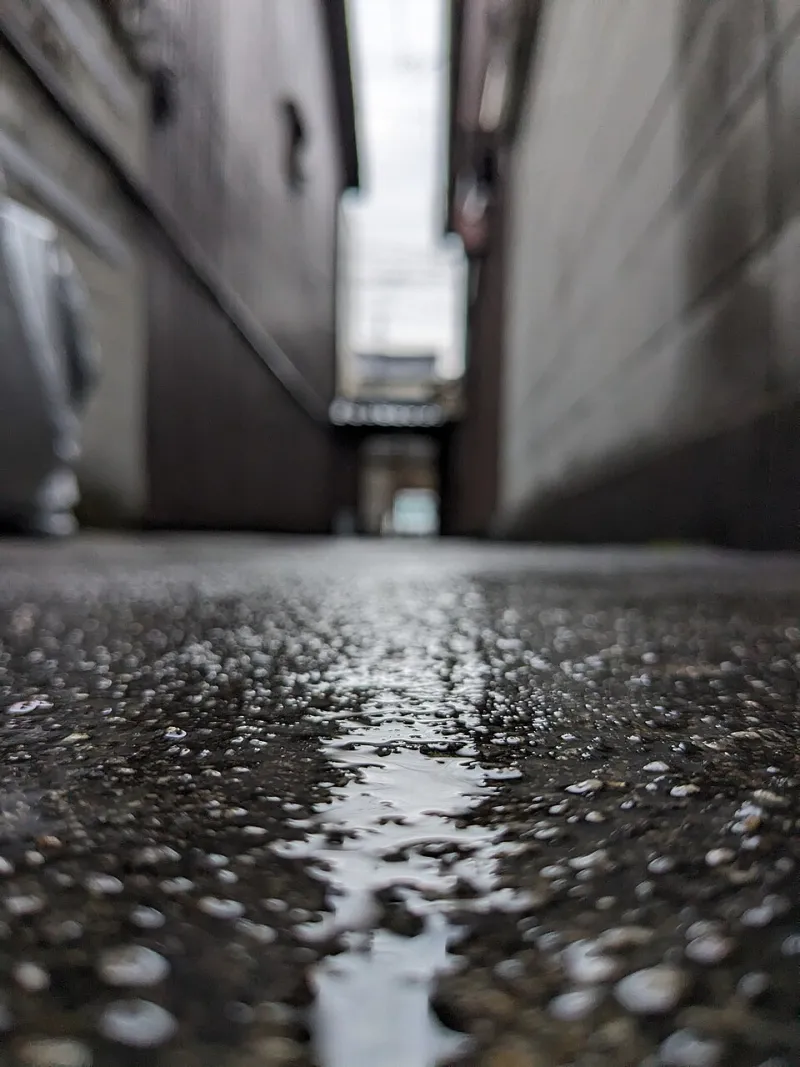
Photo: PukSup, CC0, via Wikimedia Commons
Somewhere between your third rejected podcast and the moment you realized lo-fi girl wasn't cutting it anymore, you probably clicked on a video of rain falling on a narrow Kyoto alley. No faces. No narration. Just rain, a distant bicycle bell, and the warm glow of a vending machine at the end of the street. And then, eight hours later, you were still there.
If that sounds familiar, congratulations: you've joined the quiet migration of Americans swapping their podcast queues for Japanese 'BGM-plus-footage' streams — long-form videos that pair mellow loops of music with slow, hypnotic shots of everyday Japan. They're not really videos. They're not really music. They're somewhere in between, and they're quietly taking over headphones from Portland to Providence.
What Exactly Is a 'BGM Stream'?
BGM stands for 'background music,' and in Japan the concept is baked into daily life. Department stores, train stations, and even crosswalks have their own sonic identities. The YouTube version takes that sensibility and runs with it: a channel films a location — a rainy Shinjuku side street, a shuttered konbini at 2 a.m., an empty beach in Chiba at dawn — then loops it alongside ambient jazz, city pop instrumentals, or soft piano for anywhere from one to twelve hours.
The footage is usually static or glacially slow. A single shot of rain streaking a window can carry an entire workday. Nothing happens, deliberately. And that's precisely the appeal.
The Channels Leading the Charge
A handful of names dominate the genre, and most Americans could name-check them by now:
- Rainy Kyoto-style alley streams, where the camera lingers on wet stone and paper lanterns while mellow jazz hums underneath
- 2 a.m. convenience store loops, all fluorescent hum and distant refrigerators, oddly perfect for late-night study sessions
- Empty beach and seaside town footage, the Japanese answer to those eight-hour wave videos, but with a lonely bus stop in frame
- Train window journeys, hours of passing countryside shot from a local line, paired with piano that never demands attention
These channels rack up views in the tens of millions, and a huge share of the comments are in English. Scroll through and you'll find Americans leaving notes like 'my entire remote job runs on this' and 'this is the only thing that quiets my brain.'
How This Differs from Western 'Ambient' Content
We have our own ambient scene — coffee shop crackle, NASA streams, fireplace loops. So why does the Japanese version hit differently?
For one, it's location-anchored rather than abstract. Western ambient content often strips away context: pure rain, pure static, pure ocean. Japanese BGM streams give you a place — a specific alley, a specific train car — even if nothing in it ever moves. Your brain gets a room to sit in, not just a sound.
There's also the anonymity factor. Nothing in the frame is asking anything of you. No brand logos begging for attention, no personalities, no comment-bait hooks. It's the visual equivalent of elevator music: content engineered to be beside you rather than in front of you. In a US media landscape where everything screams for engagement, that refusal to engage is the feature.
Finally, there's the aesthetic distance. A rainy street in Kyoto carries none of your own memories. It's peaceful because it isn't yours. You can't run into anyone you know, can't check your own reflections in it. It's a headspace with no baggage attached.
The All-Day Focus Soundtrack Economy
Talk to American fans and a pattern emerges: these streams have become full workday infrastructure. Writers put alley-rain loops on for morning deep work. Programmers run twelve-hour train-window videos while debugging. Students swear by the 2 a.m. konbini footage for exam season. The podcast — a medium that demands narrative attention — has been demoted to the commute, while the BGM stream holds down the desk.
It mirrors a broader shift in how Americans consume video. We've gone from watching content to curating atmosphere. The stream isn't something you watch; it's somewhere you are. In that sense, Japanese BGM channels aren't competing with Netflix or Spotify. They're competing with silence — and winning, because their silence comes with vending machines.
So Are Americans Actually Preferring Anonymous Japanese Spaces?
It sounds like a joke until you say it out loud: a meaningful chunk of the American workforce has chosen, as its default mental environment, an empty Japanese street it will never walk down. But it tracks. The spaces are clean, quiet, and utterly free of obligation — the exact opposite of the open-plan office and the notification-stacked phone.
There's something a little wistful about it, too. These streams sell a version of everyday life where nothing urgent is happening anywhere. For a country running on alert fatigue, a loop of rain on a Kyoto alley isn't escapism exactly. It's more like a placeholder — a calm, borrowed somewhere to park your brain while you get through the day.
Either way, the tabs stay open. The rain keeps falling. And somewhere in Ohio, another deadline gets met to the sound of a distant Japanese train.
Got a BGM stream you can't work without? Drop it in the comments — we're building a playlist.