Nothing Happens for 40 Minutes and It's Saving My Mental Health: The Japanese Waiting-Room Videos Americans Are Prescribing Themselves
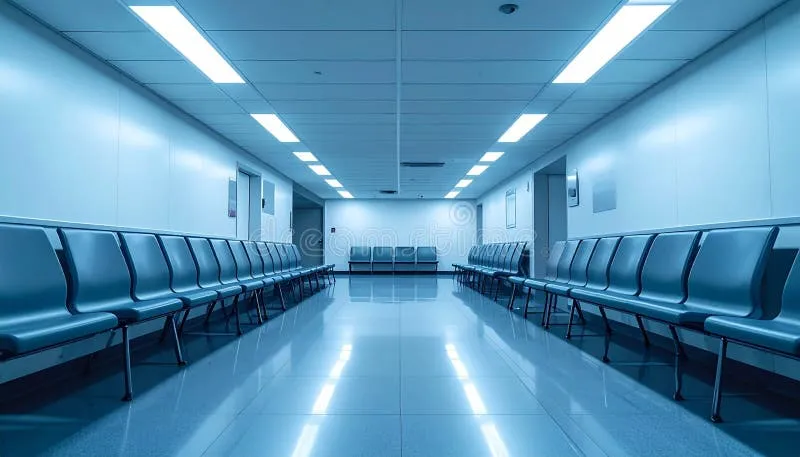
Photo: empty japanese hospital waiting room lobby fluorescent lights plastic chairs, via thumbs.dreamstime.com
The Video Where Literally Nothing Happens
Here's a scene: a hospital lobby in Sapporo. Fluorescent lights hum. A vending machine blinks in the corner. An elderly man dozes in a plastic chair. A receptionist stamps a form. That's it. That's the video. It runs 47 minutes and it has over two million views — most of them, judging by the comments, from the United States.
"Fell asleep in 8 minutes. Better than anything on my sleep playlist."
"This is the only place on the internet where I don't feel like I'm being sold something."
"I put this on while doing my taxes and my blood pressure dropped visibly."
Welcome to one of the strangest and most soothing corners of the video internet: Japanese ambient waiting-room footage. Airport boarding gates. City hall waiting numbers being called. Dental clinic reception areas. Train station benches at 2 PM on a Tuesday. Filmed in real time, usually with a locked-off camera, no talking-head commentary, no jump cuts, no algorithm-baiting thumbnail face.
And for a growing number of American viewers, these videos have become something closer to medication than entertainment.
America Is Overstimulated and Japan Noticed First
Let's be honest about what the average American scroll looks like in 2025: a TikTok that cuts every 1.2 seconds, a YouTube Short with a robotic voiceover explaining a Reddit thread, a news cycle that refreshes faster than you can read it. Our feeds are engineered to spike cortisol. Everything is loud. Everything is urgent. Everything wants your next click.
Against that backdrop, a static shot of a Japanese airport gate is almost transgressive. Nothing demands your attention. Nobody is yelling. The most dramatic event in a typical 30-minute clip is a janitor slowly mopping around a row of chairs.
There's a long American tradition of reaching for ambient media when life gets loud — the fireplace channel, lo-fi hip hop study streams, those 10-hour rain videos with 90 million views. But there's something different about waiting rooms. Rain is nature. A waiting room is institutional calm. It's the visual equivalent of white noise with fluorescent lighting, and there's a specific comfort in that: the quiet reminder that somewhere in the world, life is just... proceeding. Slowly. Without incident.
American viewers have started calling these clips "decompression chambers," and the term fits. People watch them after work. During panic spirals. As a sleep aid that actually works better than the sleep meditations with their suspiciously breathy narration.
Meet the People Who Treat Boring as a Craft
The creators making these videos aren't lazy — far from it. Talk to them and you'll find obsessive levels of intentionality behind what looks like a phone propped against a water cooler.
One creator, who films waiting areas across Kyushu and goes by a channel name that translates roughly to "Number Called, Please Wait," told us the genre has rules the audience can feel even if they can't articulate them. "You never film people's faces directly. You never zoom. You pick a room where the sound is good — the chime, the footsteps, the distant announcements. If a room is too quiet, it feels dead. If it's too busy, it feels like stress. You're looking for the exact middle."
That middle is the art. The best of these videos have a subtle sonic architecture: the soft ping of a ticket number, shoes on tile, a distant escalator hum. It's ASMR's institutional cousin. No whispering into a microphone required.
Another creator, whose channel consists entirely of Shinkansen platform waiting areas at different times of day, treats the project almost like a documentary archive. "In ten years, these rooms will look different. The signage changes, the uniforms change. Nobody films this stuff seriously. But this is where people actually live — in the waiting."
That's the quiet thesis of the whole genre: waiting rooms are one of the last truly shared spaces, where strangers of every age sit together with nothing to do but exist. Filmed honestly, they become portraits of ordinary life that no drama series can replicate.
The Comment Section Is Its Own Genre
If the videos are the medicine, the comment sections are the group therapy. Scroll through any popular waiting-room clip and you'll find Americans leaving what can only be described as tiny diary entries:
- "Watching this from a hospital in Ohio. Weirdly, it helps."
- "My therapist suggested 'boring videos.' She meant this exact genre."
- "The vending machine in the back has been my emotional support object for three weeks."
There's a parasocial tenderness to it. Regulars greet each other. Someone reports that the dozing man from a video posted two years ago is "still there, still napping, still winning." Strangers from Texas and Osaka compare notes on chair ergonomics.
It's the anti-doomscroll. Nobody is angry. Nobody is arguing about politics. The stakes are whether the 4:15 announcement happens on time.
How to Start Your Own Waiting-Room Habit
If you want to try the genre, a few tips from the deeply online:
Search in Japanese. Terms like 待合室 (waiting room), 空港 (airport), and 病院 ロビー (hospital lobby) unlock the good stuff. The algorithm will take it from there.
Longer is better. Anything under 20 minutes doesn't get you into the trance. Look for hour-plus uploads.
Sound on. Half the magic is the ambient audio — chimes, footsteps, distant trains. Don't mute it.
Use it as a transition, not a binge. These work best as a palate cleanser between the stress of your day and your evening. Ten minutes of a Sendai bus terminal is a surprisingly effective shower for your brain.
Nothing Happening Is the Whole Point
There's an irony at the heart of this trend: in an economy that monetizes every second of attention, the most valuable videos on the internet are the ones that ask for nothing. No subscribe nag, no cliffhanger, no outrage. Just a room, some chairs, and the gentle sounds of a society calmly waiting its turn.
American media executives would call that a failure. Two million insomniacs and anxiety-ridden scrollers would call it the best thing on YouTube.
Your number has been called. Please proceed to the lobby.